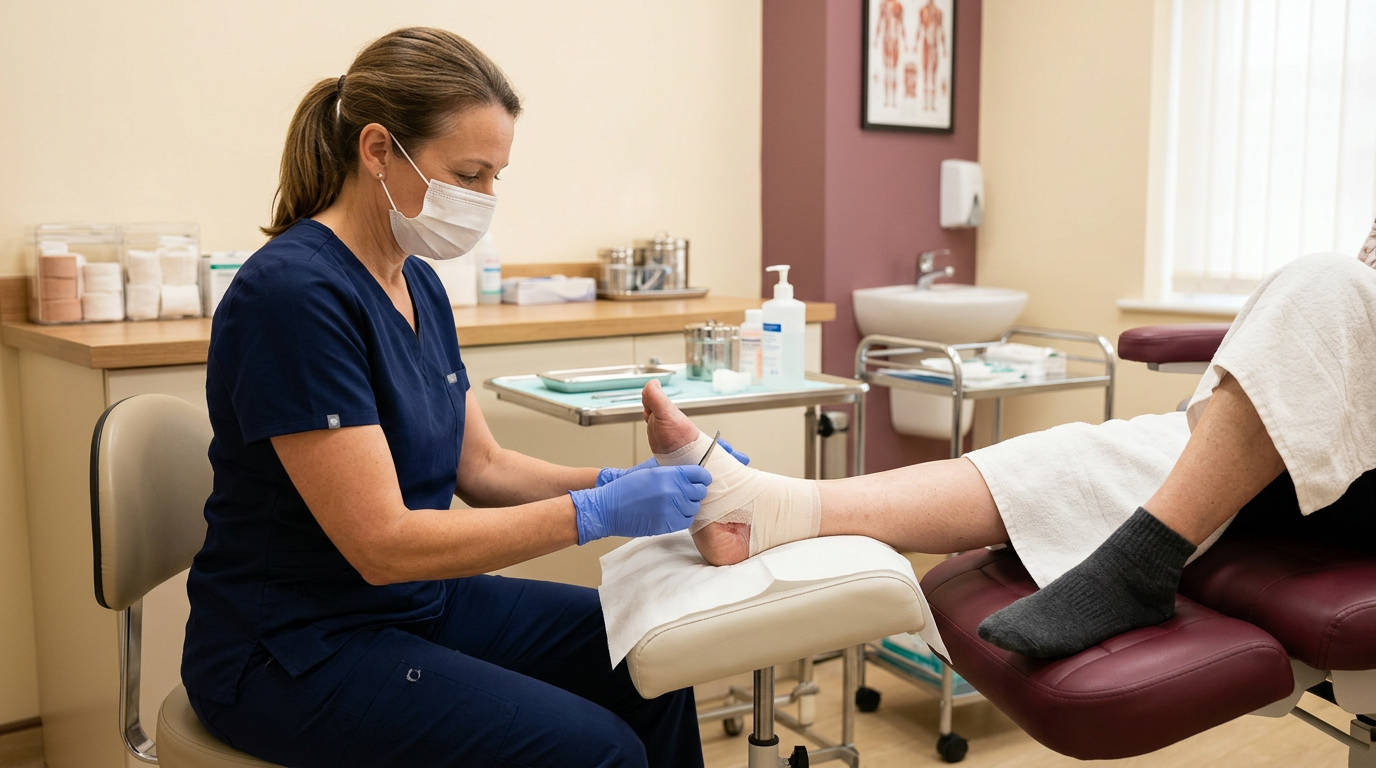
Laredo Family Foot Center knows how important it is to treat wounds as early as possible. If wounds or ulcers are left untreated they can lead to more serious complications. When you visit us you will know right away that you are in good hands. We make sure to give our full attention to each patient and make sure your questions are answered and your treatment is handled properly.
Walk-ins and scheduled appointments
We know your schedule can be hectic and we understand that getting your wounds treated as soon as possible is a must, so we want to be as available to you as possible.
Walk-ins
Scheduled appointments
What we treat
Types of wounds and ulcers
01
Diabetic Wounds and Ulcers
If a person who is diabetic gets cut or scratched, the wound itself may take longer to heal due to
Poor CirculationRestricts the body to healing itself
Reduced SensationReduces the ability to feel that there is an injury
Nerve DamageReduces the ability to feel that there is an injury
The result of a wound can easily lead to infection, if not treated promptly and thoroughly.
Diabetic Foot Care
Check for wounds
Wash feet daily
Wear socks to bed
Check shoes
Never walk barefoot
Do not smoke
Treatments
Compression Therapy
Skin Grafts
Debridement
Pressure-Off Loading
Amputation – Extreme Cases
02
Infected Wounds
Infected wounds are simply the outcome of bacteria taking over the wound after the body was unable to heal itself. If left untreated or if the person has a weak immune system can result in the wound to not heal properly and leading to infection.
Treatment
The treatment of infected wounds is to be properly cleaned and dressed to help the body combat the bacteria. In some cases medication may be taken to help fight the bacteria. If left untreated the bacteria can deteriorate the muscle, bone, and surrounding skin.
03
Pressure Ulcers
Pressure Ulcers usually occur in the foot when there is constant pressure or friction. It can be a red spot or in some severe cases affect the tissue. This is the most common type of ulcer because the constant pressure that is placed on the foot with walking. Blood circulation lessens and causes damage to the skin. Other factors could include poor nutrition, health, and excessive moisture for long periods of time.
Stages of Pressure Ulcers
Stage 1
Area is red
Stage 2
Skin is broken
Stage 3
Ulcer is deep and the tissue becomes yellowish
Stage 4
The ulcer has reached the bone
Treatments
Relieve pressure by elevating the foot
Stage 1 – wash area gently with mild soap and water
Stage 2 – Ulcers should be cleaned with a salt water rinse to remove loose, dead tissue.
Keep the sore covered with dressing
Stage 3 & 4 – will need to be treated by a doctor
04
Arterial Ulcers
When there is a lack of proper blood flow to the foot, heel, or ankle an Arterial Ulcer can occur.
Symptoms
Ulcers found on the tip of toes, heels, or the outer ankle
Can move to the tendon and cause pain
Color of skin can change to yellow, black, or brown
Treatments
Clean wound thoroughly to prevent infection
Regain proper blood flow
For more information or to schedule an appointment